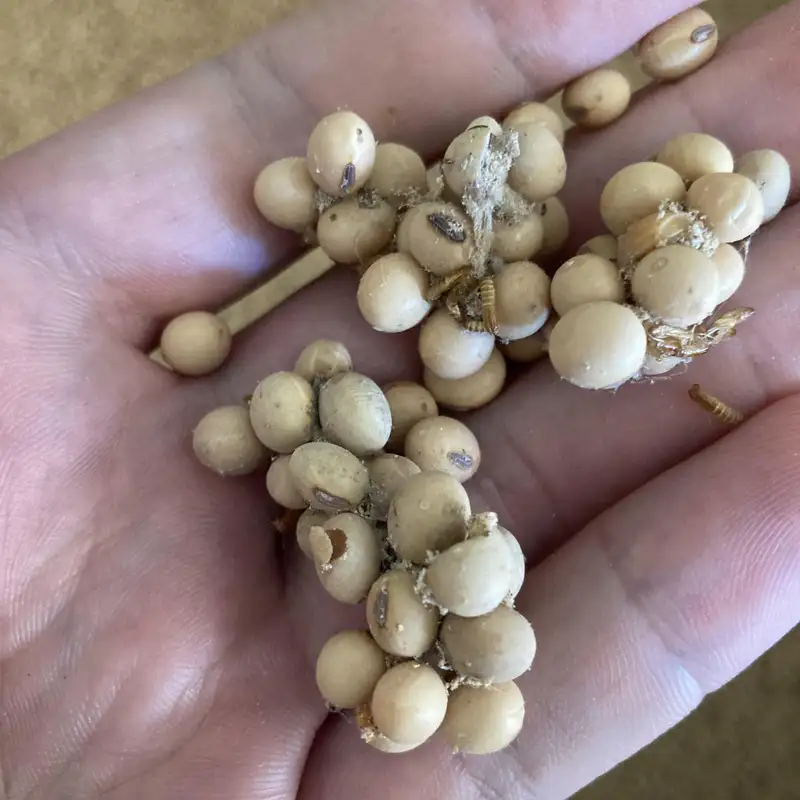
What's living in your grain bin?
Welcome everyone to the University of Minnesota's IPM podcast for field crops where we discuss pest management throughout Minnesota and across the region. And it's been a little while since we've had an episode. We've actually been on break for a little while because we've been also having another program, the strategic farming field notes program throughout the summer. And that's where we covered a bit more about issues were occurring in the field pretty much as they are occurring throughout the year. So we're back to our kinda more regular scheduled programming now.
Anthony Hanson:We'll be covering different topics for pest management, either getting ready for next year or some things to think about this fall and winter. So for this episode, we'll be discussing what's happening near grain bins and what to do for pest management there. And we have doctor Janet Knoedel from NDSU today to talk about how to manage these pests there. So welcome, Janet. Do And you wanna introduce yourself a little bit?
Anthony Hanson:What do you do at NDSU in terms of what your position is, and what crops do you cover pretty much?
Jan Knodel:I'm a professor and extension entomologist at North Dakota State University in Fargo, and I've been here about, twenty years. And I work on all field crops, provide outreach and applied research. Main ones are wheat, barley, canola, corn, soybean, house crops, and sunflower. So quite diverse.
Anthony Hanson:Yeah. That's quite the list there compared to some of us where we might focus primarily on corn or soybeans. Right. Especially when we get up to North Dakota there, you know, sometimes that's a few more crops than what we do with over here in Minnesota. Part of the reason we had you on is also because, you know, a lot of our crops in, say, Western Minnesota, some are pretty similar to what's going on in the Dakotas as well.
Anthony Hanson:And especially for when we have grain pests, that's where a lot of these issues are gonna be the same regardless of where you are. So I figured we'd jump into that topic a little bit. So we'll start off for the first question. What do you commonly hear from growers about storage issues across the region? Any issues that have popped up recently in the past year or things that like you said, it's been twenty years you've been in this position.
Anthony Hanson:Anything to keep an eye on kinda historically every now and then?
Jan Knodel:Well, actually, I've gotten several calls this year or here in the fall as the grains have come off. And one of the common questions I get is they haven't checked their bin recently, and they have been storing grain for quite a long time. It's old grain, and they just checked it, and they found out that it's infested with insects. So that's probably the most common, and they're wondering, you know, how to get rid of those insects and what to do. They got new grain that they wanna bring in and put on top of the old grain, which is a big no no.
Anthony Hanson:Yeah. That's the challenge when it comes to this because our main method of control we'll talk about is more sanitation and prevention. There's not a whole lot you can do when you have the new grain in there already. Right? You can't easily put any sort of insecticide treatment in there.
Jan Knodel:Well, if you know that you have old grain on the bottom of the bin and it's infested, the best thing is to and then you accidentally put the new grain on top. It's best to then fumigate immediately. Or your other alternative, which is fairly labor intensive, is to take the grain out of the bin, clean the bin, and maybe spray it with a bin spray to remove any insects that might be hiding and clean it out first, and then put the old and the new back into the bin with a grain protectant, which we'll be talking about more.
Anthony Hanson:Yeah. We'll cover a little bit more about, residual protectants. And we'll talk a little bit also about fumigants. I just wanted to mention, you know, for some of us, we deal with foliar insecticides more in crops. And when it comes to fumigants, that's a little bit different of a setup there.
Anthony Hanson:Is that Yes. Definitely more of a challenging way to get any product into the bin, or how is that basically done?
Jan Knodel:Well, you need to be certified to do fumigation. So first, you need to get the training so you're able to do fumigation, which is very dangerous. You're dealing with some chemicals that are either liquid or solid. And as soon as you release that into the bin, it changes into a gaseous form. And that will then move through the grain, killing all of the insects and every living thing in there, including you.
Jan Knodel:So they're very toxic to humans, so you need to be very safe. It's it's actually a a dangerous job.
Anthony Hanson:That's one of the reasons why we talk about integrated pest management. It's not just for either the economic or environmental benefits. It's also human safety too. In this case, dealing with your insect pest before you need to use a fumigant is obviously both the easier option and the safer. What kind of insects do we have infesting grain, whether it's soybeans and corn especially, but what about some of the other common crops you work with?
Jan Knodel:Well, we have a lot of different stored grain insects, and they'll get into all of the grains that we store. Some of them are more susceptible like our cereal crops, wheat, barley, oats, than like soybean, which has more of a harder shell on it, but they can infest soybeans as well. And corn is probably a preferred crop as well for some of the grains. But we have three different types of insects that we can find in the bin. We have internal feeders.
Jan Knodel:Those are our weevils, like the maize weevil, rice weevil, and lesser grain borer. And then we have the external feeders, the Indian mill moth, which is primarily found just in the top three to six inches in the grain bin. And then we have the sawtooth grain beetle, red flower beetle, confused flower beetles, and there's many more that are external feeders. And then we have, as the third group, fungus and mold insects. They like to feed on the fungus and mold growth.
Jan Knodel:When your grain gets too much moisture in it, these insects will move in, the foreign grain beetle, the hairy fungus beetle. So these are the ones, you know, that are signs that you may have a problem with your grain. There's maybe a hot spot or you may have insect infestation. We call it leafy grain when you have a problem with insects. But the external feeders that I mentioned, keeping your grain cool and clean will help resist that mold growth and insect infestation.
Jan Knodel:It's mainly when you get those we call it dirty grain, when you have broken kernels which make it easier for these external feeders to infest the grain and feed.
Anthony Hanson:I thought it was interesting. For me, this is somewhat of a newer topic even though I've been working on our farm for years. I formally, as an entomologist, I haven't been getting into grain insects very much until just recently. But you mentioned both the mold and insect interaction, and that's kinda interesting too because isn't temperature also involved in that where both the insects and the spoilage molds can increase the temperature in the bin?
Jan Knodel:Especially this year when it's been kind of a warm fall, we will see more, grain problems. So it's very important when you bring it in in the fall. If the outside temperatures are cool enough, you do wanna try to cool your grain down. The ideal temperature is 35 to 40 degrees Fahrenheit. But, yeah, when it's warm, your grain is hot, you're more likely to see more mold.
Jan Knodel:It does better when it's warmer, and you might and when it's warmer, you're more likely to have moisture problems as well. The ideal thing to do is try to cool the grain down when you first bring it in from the fall.
Anthony Hanson:So since we're speaking about the fall, a lot of folks probably have something in their bins at least right now, either last year's crop or just getting this current year's crop in. Some of us are definitely a little bit later than others. But, you know, at some point, we're gonna have a bin that's empty, especially if maybe you've emptied out a storage bin and you have corn going into your drying bin right now. So at that point, what should you be doing prior to harvest if you do have especially an empty bin versus, you know, maybe thinking about for next year if you wanna try to get ahead of any problems?
Jan Knodel:Yeah. So this is probably number one. We wanna prevent grain insect problems by cleaning, I call it. Wanna clean those empty grain bins and any equipment you're using, your trucks, your augers, combines, wagons. Everything needs to be clean.
Jan Knodel:I'm a I'm a clean freak. I just love cleaning my house. This is my area. Clean everything, you know, the cracks and crevices. Get down in the floor if you have the perforated floors and try your best to get everything, all the dust and broken bits of grain out if there's any insects.
Jan Knodel:You definitely wanna clean that area out as well. You might wanna do a spray down in the perforated floors because you can't often get the floor that area removed so you can get really down in there to clean it real well. Outside. Don't forget about the outside of the bin. That needs to be cleaned as well.
Jan Knodel:And we recommend that you go in and remove weeds as well, either by hand or with the herbicide, and have a 10 foot border around the empty grain bin. We wanna treat those grain bins case there's any insects that are hiding in the cracks and crevices. So both the inside and outside, you wanna do a treatment. You can use Melathion or Tempo are probably some of the more common ones. There is a insect growth regulator called Diacon IGR plus.
Jan Knodel:That one will control both the immature stage as the insect growth regulator prevents the insect from molting and growing into the next stage, and it also has an adulpicide insecticide for adult insects in it. So those are some that you can use. You wanna do this about two to three weeks before the new grain is placed in the bin, and the treatment will kill the insects that are emerging from the hiding places, like the cracks and crevices or the perforated floors there at the bottom of the bin. And also insects are you might have some old grain from a live stock that you're feeding that just infested outside, and it'll try to get into the bin as well. So we should spray the outside of the bin as well, and you wanna do this to the point of runoff.
Jan Knodel:And, also, spray the ceilings, the walls, any fans, and use pressure about 30 pounds per square inch and aim for those cracks and crevices. Fix any broken fans, areas, you know, cock up any areas where there's holes where these tiny insects might get in too. Well, as long as you're working on the vents, make sure they don't get in. They get through the smallest cracks.
Anthony Hanson:I'll chime in just a little bit and ask, of these insecticides, are some of these just very acute short lived, or some of these do they have a long residual period where they'll last for some time?
Jan Knodel:Yeah. It does vary with the insecticide. The melothione is organophosphate insecticide, so it generally has some more short residual. I would say, you know, about five to seven days. Whereas a, pyrethroid like tempo would have a longer residual, especially when it's not exposed to the sun outside and rain inside that bend, though, it's it's gonna have a good, probably, two to three weeks residual.
Anthony Hanson:That's a good point too to think about environmental factors that can degrade the insecticides. And I know one thing that does come up is if you're in a drying bin where you have a lot of heat versus your storage bin. So I know in the drying bins, it's generally recommended don't use these residual insecticides at least if you're going to be running the dryer soon because that insecticide will degrade very quickly and not be worth it. But, obviously, in a storage bin or if you've just cleaned out your drying bin and you're letting it sit for a while, that might be a case where you could control the insects that way. That environmental aspect definitely comes into play a lot.
Anthony Hanson:And I think that's kind of a good segue to mention, you know, fall's here. Winter is coming. And what do we do as we move into winter? What are we looking for in those bins, whether it's temperature and spoilage or insect activity? What's going on there?
Jan Knodel:Well, in the late fall, we fortunately have cooling temperatures which are happening now, and we're getting down in the fifties. So that's good news. In the late fall, like November, you know, you wanna run your aeration fan for about a week until the grain is between thirty five and forty degrees Fahrenheit. And then you don't really have to run it again until spring. But you do need to check the grain every two weeks, especially when the temperature is warmer outside and look for problems that you might have.
Jan Knodel:And the best way to do that is to smell the grain. You know, smell to see if it's musty. Another way is to fill it. If you can feel any hot temperatures, they have temperature probes and so forth that you can stick into the grain bins. You need to definitely probe use a grain probe for insects and get that probe sample several different areas, you know, the edge of the bin, the center of the bin, top, middle, and bottom to look for these insects because you don't want to be surprised.
Anthony Hanson:So on that note, I have heard, and we alluded to this earlier, that the insect feeding can cause temperatures in the grain mass to rise close to a 100 degrees Fahrenheit. Is that the case in the middle of winter even?
Jan Knodel:Well, yes. They will cause heating problems, and then that causes the mold. So in general, you don't want to have any insects in the grain. It causes hot spots, so it might not be throughout the whole grain, but you might just have a few hot spots where the insects are. And in the winter, it's more likely to be in the center of the grain.
Jan Knodel:So you don't want that to happen because then it's gonna cause some spoilage problems. The grain, as you know, is very valuable if the insects get in there. You know, you might have your shipment of grain rejected and not be able to sell it. It definitely will reduce the quality of the grain. And if there's mold in it, that's something the insects cause as well.
Jan Knodel:So there's lots of negatives to getting mold or insects, they are related because the insects cause heat. So that produces the mold, and you get the hot spots in the bin.
Anthony Hanson:So those hot temperatures, I mean, they might sound like they're too hot for insects, but they actually do well when it's Yes. Up to a 100 degrees. Right?
Jan Knodel:Yes. That's why we wanna get the grain temperature down to 35 to 40 degrees Fahrenheit. Insects typically, are cold blooded, so they're temperature sensitive. So they'll start to go dormant when the temperature gets below 50. And then once it gets below thirty, twenty five to to 20 degrees Fahrenheit, the insects can actually be killed.
Jan Knodel:But you need to be careful, especially in the winter if you're bringing in cold air into the bin because you don't wanna freeze the grain. Because, you know, when you freeze something, then you take it out of the freezer and it sweats. And that could cause mold and musty odor problems. So be careful in the winter not to freeze the grain. And if you do, you should try to warm it up a bit and run the aeration fans for an hour or so every other week during the winter.
Anthony Hanson:When it hits well, probably will hit negative 30 again. Maybe not this winter, but in an upcoming winter, I'm sure, like we had last year. What should you be doing in that case? Is that where if you still have some moisture in your grain, probably best not to cool it down too much. But if it's dry, try to get as much cool air through there as you can?
Jan Knodel:Well, if you're trying to kill the insects, that's a good time to run some air through. But, again, you need to do it carefully so you don't freeze the grain because you wanna keep it at that 35 to 40. So you could do that, you know, but be sure you monitor the temperature of the grain so you don't get it too cold because you don't want it to freeze.
Anthony Hanson:So, hopefully, you know, we won't have too crazy of a winter for that many nights where it's negative 30 or lower. But at that point, you know, keeping an eye on things through winter, then we're moving into spring and next summer, and it might depend what people are storing their grain for. Some might be doing long term. Others might only hold on to it for a year or less and some are feeding for livestock. So what are your thoughts on prepping from monitoring as we go into spring or summer based on whether someone's doing long term storage or maybe just using it to feed later on?
Jan Knodel:If you're gonna, you know, use store it into, like, late summer, you should warm the grain in the spring. Usually, April, maybe March, depending on how warm our March is. But, start to warm it up to about 50 degrees Fahrenheit by aerating. Some people don't prefer just to leave the grain, you know, at the 30 to 40 degrees as long as possible because cool, dry grain is good quality grain, and it's not gonna get infested with insect or mold at that temperature. So we're kind of doing, you know, reverse moisture migration when you warm the grain on the surface and the colder grain is towards the center of the bin.
Jan Knodel:So you can develop some hot spots or trouble spots below the grain surface when you do this, when you warm the grain.
Anthony Hanson:I was gonna say that, it sounds counterintuitive at first where you think you wanna warm up the grain to keep the moisture down where you might think that the opposite might happen. But, you know, that makes sense definitely when you think about the differences in that grain mass there. Even if sometimes it's whether it's the insects or just flat out temperature we're looking at. So it's not all just pest management, but these are all very intertwined when it comes just the management of trying to keep your grain basically in good condition. It can be pest issues, could be just temperature that interplays into all these two.
Jan Knodel:Yep. And you wanna continue aeration in the spring, once you start it, and then keep continuing until the grain is uniform temperature to near outdoor temperature.
Anthony Hanson:So if someone is storing for more than a year, maybe it's something they don't know what to do with yet, they might be thinking long term marketing possibly. Are there any options for long term storage when it comes to further insecticides, protectants there? They should think about if they apply it, say, on the top of the grain mass or what's left of the bin that they can get to at least?
Jan Knodel:Yes. If you're gonna store it more than ten months, definitely, you wanna put a grain protectant on when you're auguring it into the bin. And then it's also a good idea, to put a top dressings up at the top of the bin, usually six inches or so on the top grain surface there for Indian meal moth, which is a very common stored grain pest. And there are several treatments you can use for Indian meal moth. One of the more common is BT, which is for the larval stage, which is the damaging stage.
Jan Knodel:BT is pretty common. It's called Dipel, one of the trade names, or BioBit. So you could apply that to the top surface of the grain. You know, safety is very important. If you're gonna be up there at the top of the grain, you know, be very careful and make sure someone is watching you.
Anthony Hanson:That's a good point. Harnesses and ropes are cheap, but you don't have to cheap out on them or not have them at all either because that's it's just one less worry if you're harnessed in good. And even for me, we have some older bins on our farm, you know, we could still hook into things pretty well where, you know, we can still be pretty safe about that. So it's it's not always just the pesticide applicator safety side of things. It's just flat out if you're in a grain bin, take care of yourself.
Jan Knodel:Yes.
Anthony Hanson:And you mentioned Indian meal moth. I kinda had a fun story about that when we had an old pile of soybeans. We were just, you know, feeding some livestock, and we've kinda forgotten about it for some time. I went into the shed where it was, and the biggest swarm of Indian mule moth I've ever seen, it was just covering the whole room. You couldn't see to the other side of the wall even.
Jan Knodel:Oh, wow.
Anthony Hanson:They can get pretty thick. So even an entomologist like me, we get caught off guard sometimes. We might forget about things, and that happens in farming all the time too. So that's why we mentioned this one where, ideally, you wanna get ahead of things and have your sanitation in place and to watch things, but sometimes issues are still going to occur. So we do have some of those options to help you out, but, obviously, it's a little more complicated than when you're in your fields and you can go out with a foliar spray.
Anthony Hanson:There's definitely a lot more care that goes into all this.
Jan Knodel:Well, I wanted to mention, another thing with Indian mill moth is the webbing on the top of the grain. So you can look for that to see if you have the larvae that webs kinda makes a crust on the grain. If you do have that, you should try to break that up before you apply any insecticide. You'll get better control.
Anthony Hanson:Yeah. I feel like that's one of the easier ones to identify just because you will find clumps if you just put your hand in there. Yeah. I feel like most people have seen it, but maybe they haven't been able to put a name to it before.
Jan Knodel:So
Anthony Hanson:that might be the picture we'll throw on the link for people for Okay. Of the episode. So with that, thank you, doctor Knoll, for visiting us today. And Thank you. We will maybe have some more updates from the Dakota side of things in the future too for this podcast because we do like to cover the region a bit, especially Western Minnesota.
Anthony Hanson:It overlaps a lot with the Dakotas. We have a broad range of farming practices in our state, and that goes across the region too.
Jan Knodel:Okay. Yeah. Thank you very much. I appreciate the invite and hope it's been useful.
Anthony Hanson:Thank you, doctor Knoedel. Thank you everyone for listening to the University of Minnesota Integrated Pest Management podcast for field crops. Thank you.